What is Muharram teaching me this year?
Memories from the past and reflections on the future
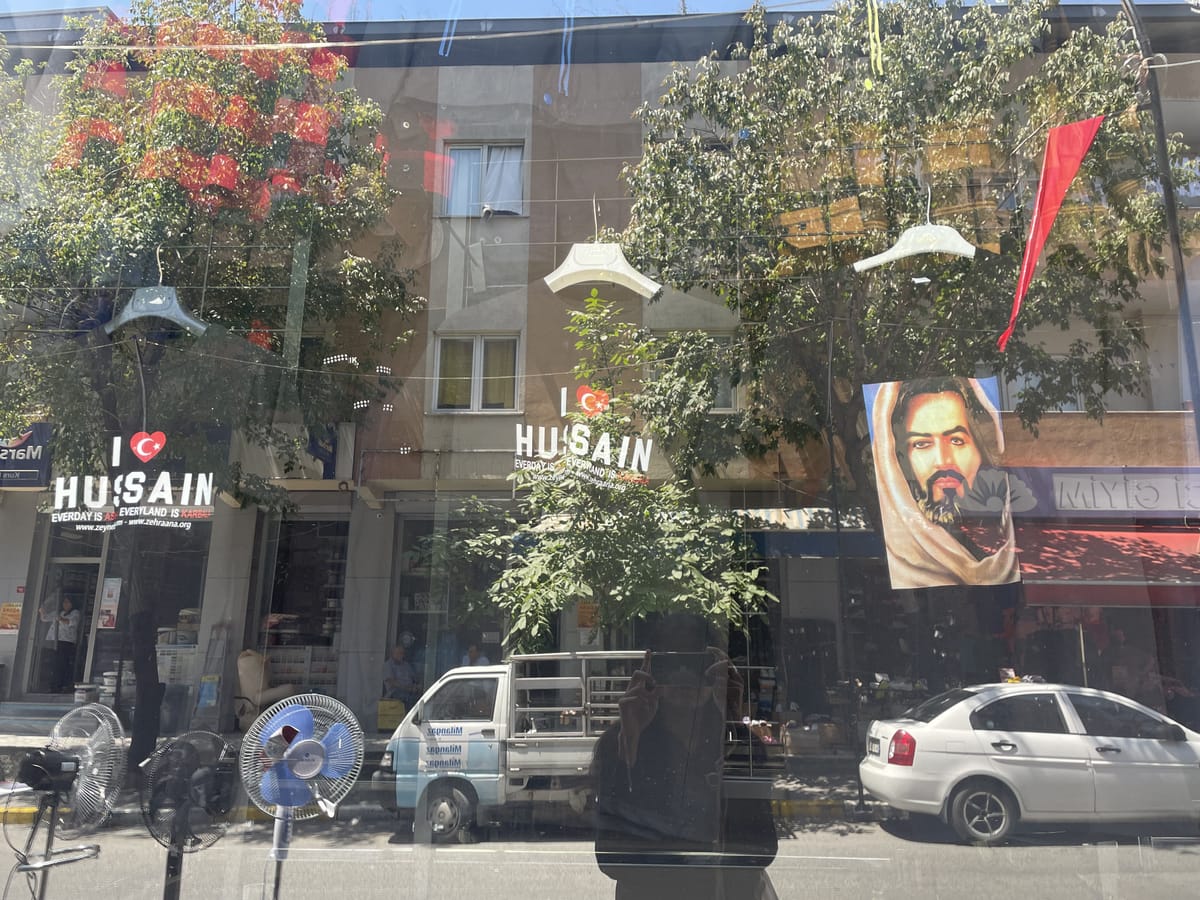
A couple of years ago, I found myself in Istanbul during the early days of Muharram. After a round of internet searches, I learnt about a popular Shia district in the city and decided to pay it a visit. It was a hot 45-min drive, but I finally found myself on a long stretch of a wide road called Zeynebiye Caddesi, with black banners stretched across the street welcoming visitors into the neighbourhood. A large replica of Imam Hussain’s mausoleum was perched right above the street’s entry point, and all the street light poles had posters depicting the veiled and illuminated representations of Hazrat Abbas, Imam Hussain, and Hazrat Ali Asghar, along with announcement dates / timings for Muharram processions.
The Zeynebiye Mosque and Cultural Center located at the corner of the road’s intersection was under construction at the time with artisans and painters surrounding it. Just as I was observing the mosque from outside, the azaan began playing and I had a strange longing to go inside, but decades of patriarchal conditioning prevented me from doing so. I was also not carrying a head-covering which complicated matters further.
Growing up in an Indian Shia household, Muharram carried a different kind of reverence and brought a unique positionality to my Muslim identity. Amid a culture that predominantly situated Muslims within certain stereotypes, being a Shia Muslim brought more folds to this experience. I witnessed regular debates around the historical Shia-Sunni divide especially within the male members of my family. For some it was a matter of historical accuracy, for others it was about divine rights, but it was the period of Muharram that settled all these enquiries. For Shia followers, Imam Hussain and his family’s sacrifice in the face of tyrannical forces reaffirmed his status as the true bearer of Islamic values as envisioned and affirmed by Prophet Muhammad.